
Email Marketing in 2026: How Businesses Can Turn Subscribers Into Customers
Businesses have more options than ever in 2026 to connect with potential clients, but attracting attention is just the first step. Long-term growth is fueled by establishing connections with individuals who are genuinely interested in a business. Email marketing is still one of the most useful and successful digital marketing strategies in this situation.
In contrast to social media, where companies rely significantly on shifting algorithms, email allows brands to interact directly with their email subscribers. Businesses can use well-planned emails to promote items, welcome new leads, and share helpful information in order to foster trust and motivate clients to take action.
What Is Email Marketing?
The practice of communicating with clients, prospects, and subscribers via email is known as email marketing. Depending on their objectives, businesses can send a variety of messages, such as newsletters, promotional emails, product updates, instructional materials, and exclusive deals.
Sending emails is not the primary goal. The appropriate people receive helpful email content at the right moment when a campaign is successful.
For instance, a new subscriber to an online clothes company might receive a welcome email with product recommendations based on their likes. It might offer a special deal a few days later to entice a purchase.
This method transforms a regular email list into a useful channel for communicating with customers.
Why Email Marketing Matters in 2026
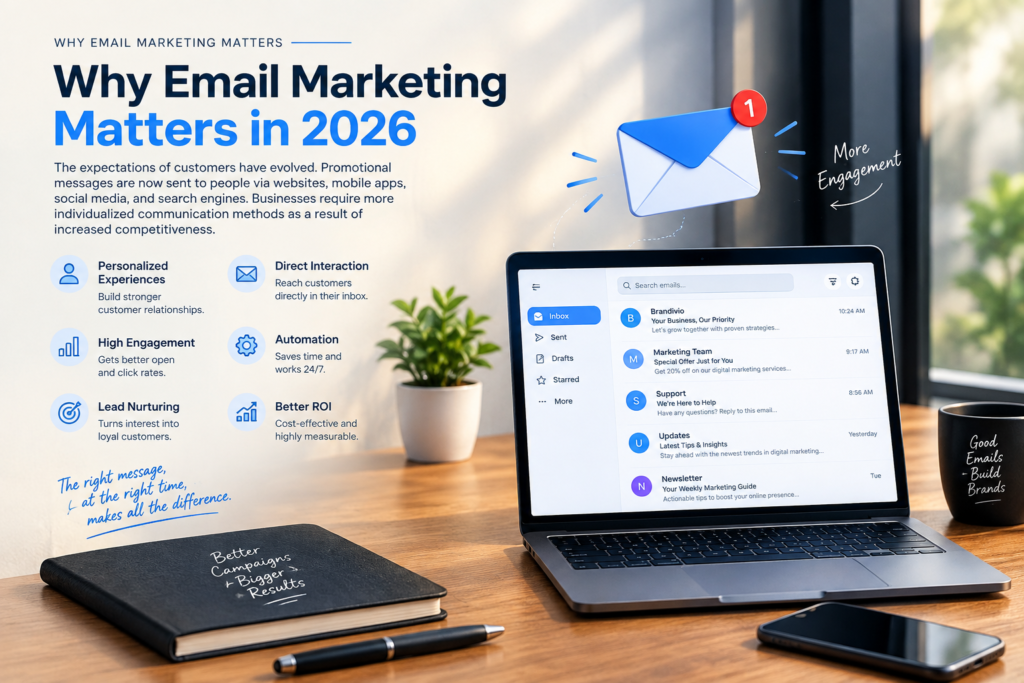
The expectations of customers have evolved. Promotional messages are now sent to people via websites, mobile apps, social media, and search engines. Businesses require more individualized communication methods as a result of increased competitiveness.
To generate more relevant consumer experiences, modern email marketing integrates data, automation, personalization, and helpful content.
Businesses still utilize email for a number of significant reasons, including:
Direct interaction with prospective clients
Increased chances for customized messaging
High levels of client interaction
Automated nurturing of leads
Promotion of goods and services
Simple performance monitoring
Possibilities for increasing conversion rates
Email can be a useful tool for small businesses in particular to stay in touch with clients without relying solely on paid advertising.
Benefits of Email Marketing for Businesses
A strong email program can support different stages of the customer journey. Here are some of the major benefits of email marketing.
Builds Stronger Customer Relationships
Businesses can maintain a connection with their audience by communicating on a regular basis. Rather than merely reaching out to consumers when a product needs to be sold, brands can offer useful information, updates, advice, and instructional materials.
Potential clients may get more familiar with the company as a result of this regularity.
Supports Lead Nurturing
Not every visitor is prepared to make a purchase right away. Before making a choice, some people require additional information.
Through a prearranged series of messages, email enables firms to keep in touch with these prospects. Lead nurturing is a technique that can progressively bring interested parties closer to becoming clients.
Helps Increase Conversions
Personalized recommendations and pertinent offers can motivate subscribers to act. People may be directed to a product page, service page, booking form, or special deal by a well-designed campaign.
Businesses can gradually increase their conversion rates by experimenting with various messaging and monitoring the outcomes.
Cost-Effective Customer Communication
When firms employ email marketing automation to handle recurring communication, email management can be more cost-effective than many traditional marketing mediums.
How to Build an Effective Email Marketing Strategy
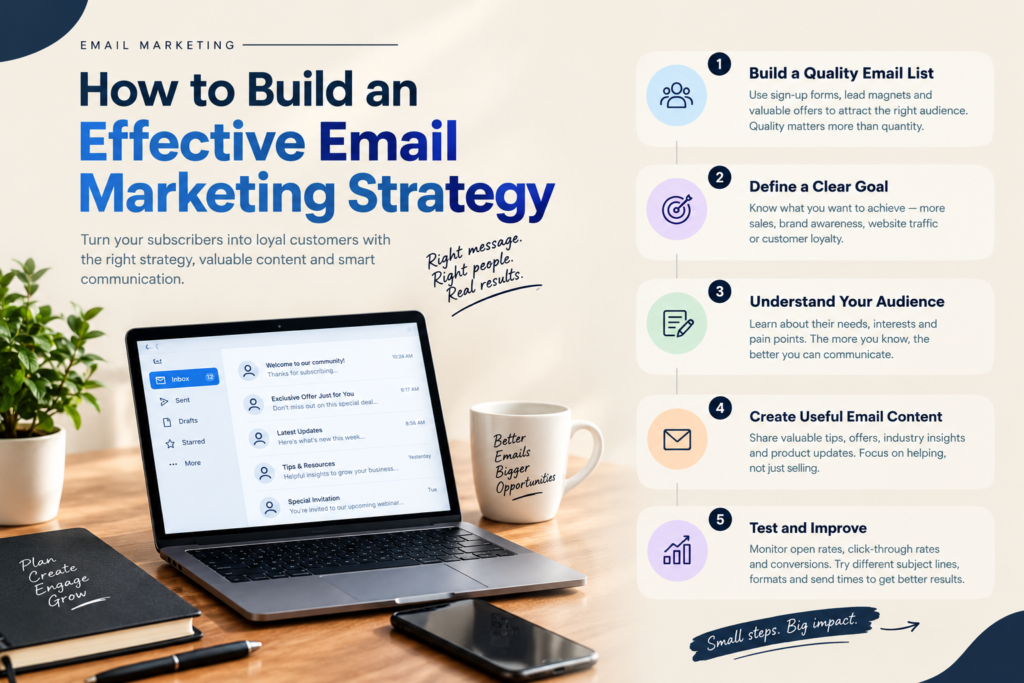
A successful email marketing strategy starts with a clear understanding of the audience. Sending the same message to everyone may not produce the best results.
A practical strategy can include these steps:
1. Build a Quality Email List
Gathering subscribers who have voluntarily given their email addresses is the first step. Through online forms, helpful tools, newsletters, discounts, or exclusive deals, businesses can promote sign-ups.
Having a lot of contacts is not as important as quality.
2. Define a Clear Goal
Every campaign ought to have a goal. Creating leads, advertising a product, boosting website traffic, driving recurring purchases, or enhancing consumer interaction are some possible objectives.
It is simpler to produce appropriate material and track outcomes when there is a clear goal.
3. Understand Your Audience
Find out what your subscribers require, what issues they have, and what kinds of material they find interesting. Businesses can use this information to craft communications that are more pertinent.
4. Create Useful Email Content
Good emails should provide value instead of focusing only on sales. Depending on the business, content could include educational tips, product information, industry insights, case studies, offers, or helpful resources.
5. Test and Improve
Monitor campaign performance and experiment with subject lines, CTAs, content formats, and sending times. Small improvements can make a noticeable difference over time.
Email Marketing Automation: Reaching Customers at the Right Time
The capacity to send messages automatically based on consumer activities is one of the main benefits of contemporary email marketing automation.
Businesses can develop automated workflows that react to particular circumstances in place of manually sending every email.
An online retailer might, for instance, produce the following sequence:
A client registers → Welcome email
Products viewed by customers ↑ Product recommendations
A reminder email is sent when a customer adds an item to their cart.
Purchases made by customers Thank you by email
A few weeks later => Repeat-purchase offer
While maintaining consistency in communication, this kind of marketing automation saves time.
Welcome sequences, abandoned-cart reminders, customer education, event registrations, and re-engagement initiatives can all benefit from automation.
Audience Segmentation and Personalized Emails
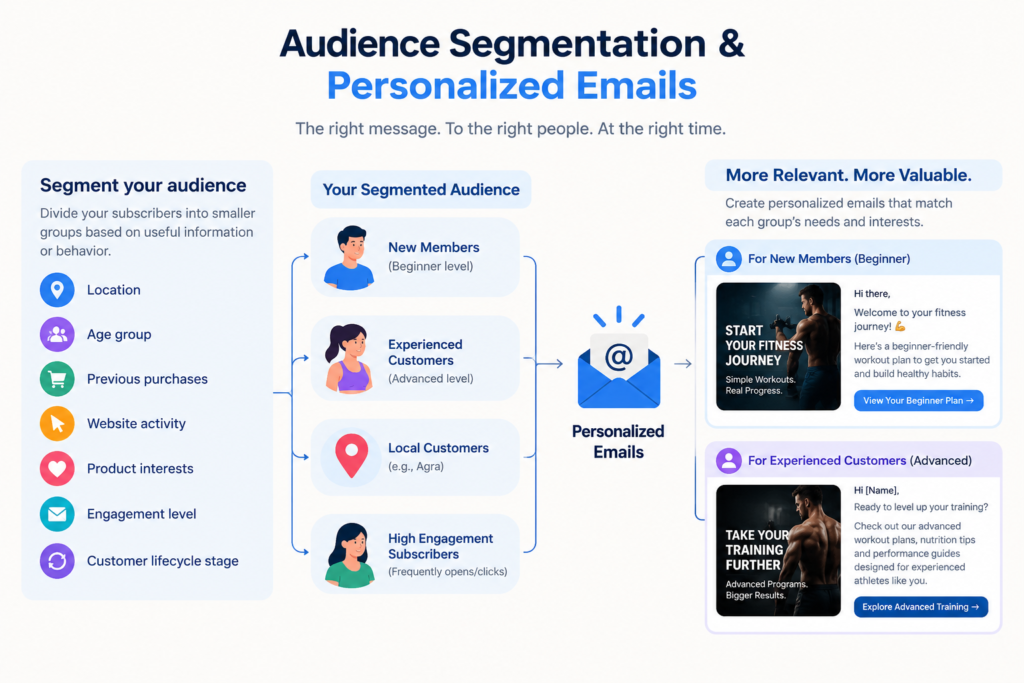
Not every subscriber has the same needs. Audience segmentation allows businesses to divide their email subscribers into smaller groups based on useful information or behavior.
Businesses may create segments based on:
Location
Age group
Previous purchases
Website activity
Product interests
Engagement level
Customer lifecycle stage
After segmentation, brands can create personalized emails that are more relevant to each group.
For example, a fitness business could send beginner workout content to new members while sharing advanced training information with experienced customers. The message becomes more useful because it matches the subscriber’s interests.
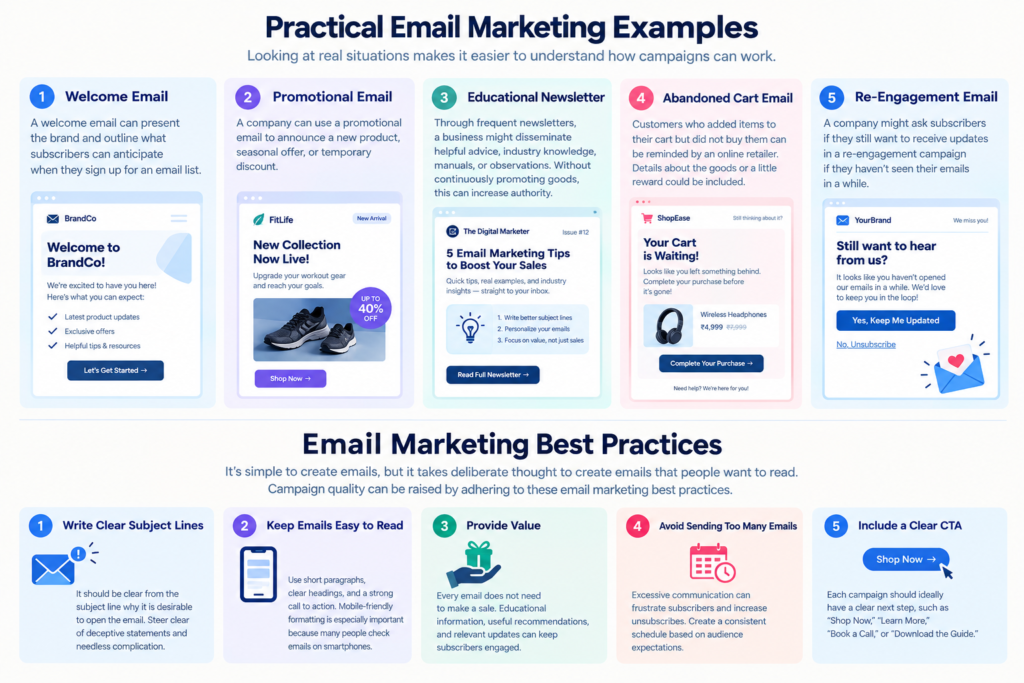
Practical Email Marketing Examples
Looking at real situations makes it easier to understand how campaigns can work.
Welcome Email
A welcome email can present the brand and outline what subscribers can anticipate when they sign up for an email list.
Promotional Email
A company can use a promotional email to announce a new product, seasonal offer, or temporary discount.
Educational Newsletter
Through frequent newsletters, a business might disseminate helpful advice, industry knowledge, manuals, or observations. Without continuously promoting goods, this can increase authority.
Abandoned Cart Email
Customers who added items to their cart but did not buy them can be reminded by an online retailer. Details about the goods or a little reward could be included in the reminder.
Re-Engagement Email
A company might ask subscribers if they still want to receive updates in a re-engagement campaign if they haven’t seen their emails in a while.
These are a few of the most useful email marketing examples that companies can modify to fit their particular clientele.
Email Marketing Best Practices
It’s simple to create emails, but it takes deliberate thought to create emails that people want to read. Campaign quality can be raised by adhering to these email marketing best practices.
Write Clear Subject Lines
It should be clear from the subject line why it is desirable to open the email. Steer clear of deceptive statements and needless complication.
Keep Emails Easy to Read
Use short paragraphs, clear headings, and a strong call to action. Mobile-friendly formatting is especially important because many people check emails on smartphones.
Provide Value
Every email does not need to make a sale. Educational information, useful recommendations, and relevant updates can keep subscribers engaged.
Avoid Sending Too Many Emails
Excessive communication can frustrate subscribers and increase unsubscribes. Create a consistent schedule based on audience expectations.
Include a Clear CTA
Each campaign should ideally have a clear next step, such as “Shop Now,” “Learn More,” “Book a Call,” or “Download the Guide.”
Measuring Email Campaign Performance
A campaign should not be judged only by how many emails were sent. Businesses need to understand what subscribers actually did after receiving them.
This is where email analytics becomes important.
Businesses can monitor metrics such as:
- Open rates
- Click-through rates
- Unsubscribe rates
- Conversion rates
- Bounce rates
- Revenue generated
- Subscriber growth
- Engagement levels
For example, if an email receives many opens but very few clicks, the subject line may be working while the content or CTA needs improvement.
Regular analysis helps businesses identify what works and make better decisions for future email campaigns.
Turning Subscribers Into Customers
The ultimate goal is not simply to increase the number of subscribers. Businesses need to guide interested people toward meaningful actions.
A strong customer journey might look like this:
Subscriber → Engaged Reader → Qualified Lead → Customer → Repeat Customer
This process requires relevant content, timely communication, effective email marketing automation, and consistent lead nurturing.
For example, a software company might first offer a free guide, then send educational emails, introduce its product, provide a product demonstration, and finally offer a consultation. Each stage answers a different customer need.
When businesses understand this journey, their emails become more than promotional messages. They become part of a complete customer experience.
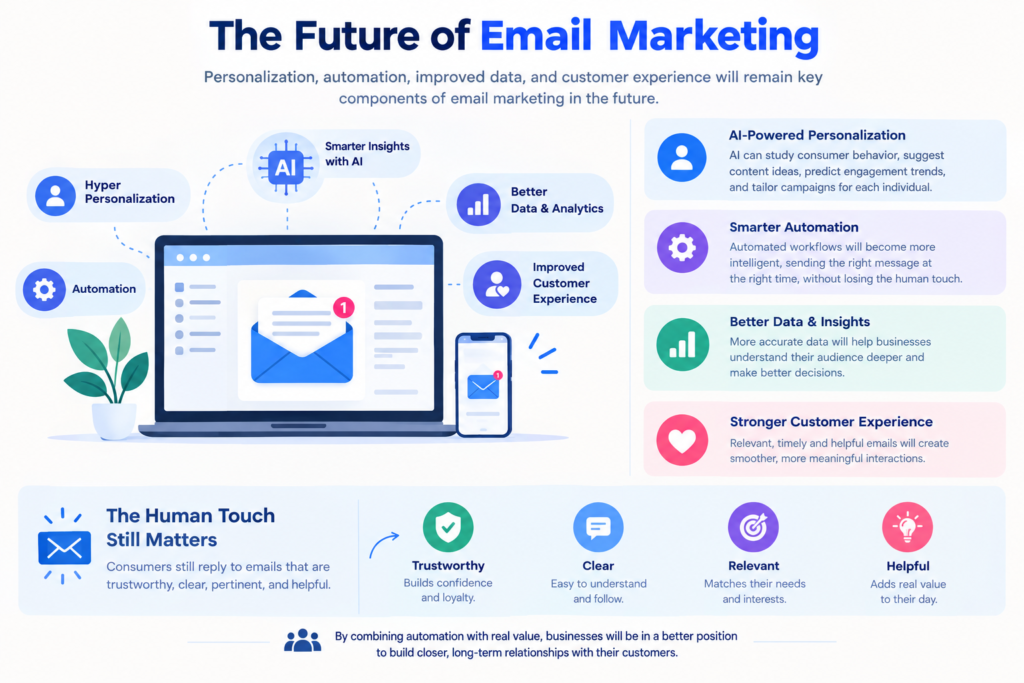
The Future of Email Marketing
.Personalization, automation, improved data, and customer experience will remain key components of email marketing in the future.
Businesses can use artificial intelligence to better study consumer behavior, generate ideas for content, forecast engagement trends, and enhance campaign tailoring. But rather than taking the role of human communication, technology should enhance the approach.
Consumers still reply to emails that are trustworthy, clear, pertinent, and helpful.
Companies will be in a better position to forge closer bonds with their customers in the years to come if they integrate automation with real value.
Conclusion
.In 2026, email marketing will still be a potent tool for companies to engage with their customers, nurture leads, and boost conversions. Businesses may establish communication that supports clients throughout their purchasing process by utilizing segmentation, personalized content, automation, analytics, and building a high-quality email list.
Instead of just sending more emails, the secret is to concentrate on relevancy. Subscribers are more inclined to interact, trust the company, and ultimately become customers when firms know their audience and regularly provide helpful information.
Ready to Improve Your Email Marketing?
.A well-thought-out email campaign can help your company develop closer ties with its clients and convert more subscribers into devoted patrons. Get expert email marketing support to advance your digital marketing strategy and develop successful campaigns, automate consumer communications, and enhance email performance.