

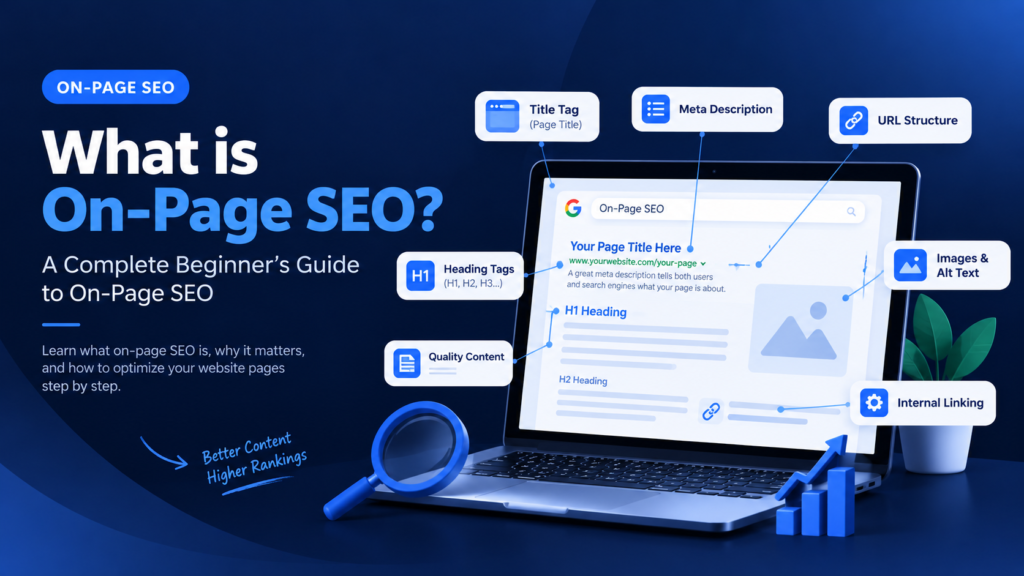
What is On-Page SEO? A Complete Beginner’s Guide to On-Page SEO
What is On-Page SEO? A Complete Beginner’s Guide to On-Page SEO Making quality content for your website is just one aspect of getting found online. Additionally, you must ensure that each page is easily readable, navigable, and usable by search engines. On-Page SEO is crucial in this situation. To put it simply, On-Page SEO is the process of making improvements to your websites so that visitors can more quickly access relevant information and search engines can comprehend your material. Titles, headings, URLs, content, internal links, pictures, and the user experience as a whole are all included. Google’s current guidelines still place a strong emphasis on basic SEO techniques and helpful, trustworthy, people-first content. These principles also hold true as Google Search incorporates more AI-powered features. Understanding On-Page SEO provides you with a useful basis for enhancing your website, regardless of whether you are a blogger, a business owner running a website, or a novice studying digital marketing. What Is On-Page SEO? The optimization of components that are immediately on a webpage is known as “on-page SEO.” The objective is to improve the page’s comprehensibility for both users and search engines. Because search engines must evaluate a webpage’s content, structure, and purpose before determining how it connects to a user’s search query, it is a crucial component of search engine optimization. Assume, for instance, that you write a piece titled “digital marketing for small businesses.” Appropriate website optimization may entail: Creating a descriptive titleUsing a clear H1 headingOrganizing information with H2 and H3 headingsNaturally using relevant keywordsWriting useful and original contentCreating a readable URLAdding relevant internal linksOptimizing images and alt textMaking the page easy to use on mobile devices The website itself is where this kind of SEO optimization mostly takes place. Off-Page SEO, which typically entails actions outside of your own webpage, such as obtaining backlinks, creating brand mentions, and establishing online authority, is distinct from On-Page SEO. Why Is On-Page SEO Important? In addition to enhancing the user experience, effective on-page SEO can assist search engines in comprehending the topic and applicability of a webpage. It matters for the following significant reasons: 1. Helps Search Engines Understand Your Content A webpage’s text, headings, links, graphics, and page structure are all examined by search engines. A page’s topic is easier to understand when it has clear material and descriptive details. 2. Helps Match Content With Search Intent The purpose of a search for “what is SEO?” differs from that of a search for “SEO agency near me.” You may produce content that truly addresses the visitor’s search query by having a thorough understanding of search intent. 3. Enhances the User Experience Search engines are just one aspect of effective SEO. A page is more user-friendly when it has clear headings, intelligible content, helpful links, optimized pictures, and simple navigation. 4. Promotes Visibility in Organic Search Stronger contextual information about a page’s content can be provided to search engines through optimization. But optimization by itself does not ensure a specific ranking. Google makes it clear that crawling, indexing, and ranking are not guarantyd by adhering to SEO best practices. 5. Improves Website Organization A website can be made easier for users and search engines to navigate by using consistent headings, URLs, internal links, and well-organized material. How Does On-Page SEO Work? Lorem ipsum dolor sit amet, consectetur adipiscing elit. Ut elit tellus, luctus nec ullamcorper mattis, pulvinar dapibus leo. Automated systems are used by search engines to find, crawl, comprehend, and index webpages. As a result, your page should make it obvious what its subject and goal are. Important elements include: Page content: Provides a thorough explanation of the topic. Keywords: Describe the vocabulary that users use when conducting searches. Title tag: Provides a concise description of the page. Headings: Divide the text into sections that make sense. Meta description: Can summarize the page for users in search results. URL: Offers an additional informative signal about the page. Internal links: Link similar pages together on your website. Images: When correctly optimized, they can complement the written information. Search intent: Assists in making sure the user’s purpose is met by the content. In particular, Google’s Search Essentials advises employing terms that readers might use to find your material in prominent and descriptive places like headings, titles, alt text, and link text. Important On-Page SEO Factors 1. The title tag One of the first things visitors may see when your website shows up in search results is the title tag. A good title should be pertinent to the page, succinct, and descriptive. For instance: Bad: Homepage Better: A Comprehensive Beginner’s Guide to On-Page SEO Google advises against ambiguous or overly lengthy titles in favor of clear and succinct title language. 2. Meta Description A brief synopsis of a webpage is given in a meta description. A helpful description can assist viewers understand what to expect from the page, even though it is more than just a tool for adding keywords. For instance: Discover the most crucial optimization elements, learn what On-Page SEO is, and use a useful checklist to enhance your website. Make the description of each significant page distinct and pertinent. 4. Headings Your content is arranged using headings. A common structure might be: H1: What Is On-Page SEO? H2: Why Is On-Page SEO Important? H2: Important On-Page SEO Factors H3: Title Tag H3: Meta Description H3: Internal Linking Make use of a single, distinct H1 and use H2 and H3 headings to logically arrange supporting sections. 5. Placement of Keywords Although they should be employed organically, keywords aid in conveying the content of a page. When applicable, include your primary theme, such as: Headline primary heading Overview Subheadings that are relevant URL for body content when appropriate When descriptive and pertinent, image alt text To improve keyword density, don’t repeat a word in an artificial way. 6. Superior Content The core of contemporary SEO is useful content. Concentrate on fully addressing the reader’s questions rather than crafting an article just
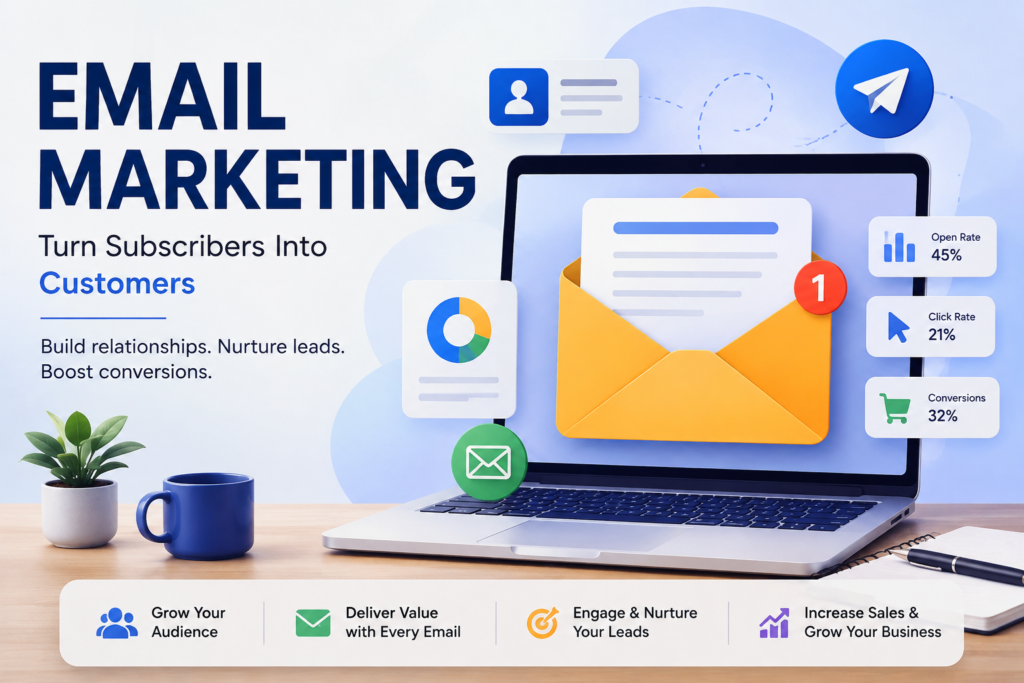
Email Marketing in 2026: How Businesses Can Turn Subscribers Into Customers
Email Marketing in 2026: How Businesses Can Turn Subscribers Into Customers Businesses have more options than ever in 2026 to connect with potential clients, but attracting attention is just the first step. Long-term growth is fueled by establishing connections with individuals who are genuinely interested in a business. Email marketing is still one of the most useful and successful digital marketing strategies in this situation. In contrast to social media, where companies rely significantly on shifting algorithms, email allows brands to interact directly with their email subscribers. Businesses can use well-planned emails to promote items, welcome new leads, and share helpful information in order to foster trust and motivate clients to take action. What Is Email Marketing? The practice of communicating with clients, prospects, and subscribers via email is known as email marketing. Depending on their objectives, businesses can send a variety of messages, such as newsletters, promotional emails, product updates, instructional materials, and exclusive deals. Sending emails is not the primary goal. The appropriate people receive helpful email content at the right moment when a campaign is successful. For instance, a new subscriber to an online clothes company might receive a welcome email with product recommendations based on their likes. It might offer a special deal a few days later to entice a purchase. This method transforms a regular email list into a useful channel for communicating with customers. Why Email Marketing Matters in 2026 The expectations of customers have evolved. Promotional messages are now sent to people via websites, mobile apps, social media, and search engines. Businesses require more individualized communication methods as a result of increased competitiveness. To generate more relevant consumer experiences, modern email marketing integrates data, automation, personalization, and helpful content. Businesses still utilize email for a number of significant reasons, including: Direct interaction with prospective clientsIncreased chances for customized messagingHigh levels of client interactionAutomated nurturing of leadsPromotion of goods and servicesSimple performance monitoringPossibilities for increasing conversion rates Email can be a useful tool for small businesses in particular to stay in touch with clients without relying solely on paid advertising. Benefits of Email Marketing for Businesses A strong email program can support different stages of the customer journey. Here are some of the major benefits of email marketing. Builds Stronger Customer Relationships Businesses can maintain a connection with their audience by communicating on a regular basis. Rather than merely reaching out to consumers when a product needs to be sold, brands can offer useful information, updates, advice, and instructional materials. Potential clients may get more familiar with the company as a result of this regularity. Supports Lead Nurturing Not every visitor is prepared to make a purchase right away. Before making a choice, some people require additional information. Through a prearranged series of messages, email enables firms to keep in touch with these prospects. Lead nurturing is a technique that can progressively bring interested parties closer to becoming clients. Helps Increase Conversions Personalized recommendations and pertinent offers can motivate subscribers to act. People may be directed to a product page, service page, booking form, or special deal by a well-designed campaign. Businesses can gradually increase their conversion rates by experimenting with various messaging and monitoring the outcomes. Cost-Effective Customer Communication When firms employ email marketing automation to handle recurring communication, email management can be more cost-effective than many traditional marketing mediums. How to Build an Effective Email Marketing Strategy A successful email marketing strategy starts with a clear understanding of the audience. Sending the same message to everyone may not produce the best results. A practical strategy can include these steps: 1. Build a Quality Email List Gathering subscribers who have voluntarily given their email addresses is the first step. Through online forms, helpful tools, newsletters, discounts, or exclusive deals, businesses can promote sign-ups. Having a lot of contacts is not as important as quality. 2. Define a Clear Goal Every campaign ought to have a goal. Creating leads, advertising a product, boosting website traffic, driving recurring purchases, or enhancing consumer interaction are some possible objectives. It is simpler to produce appropriate material and track outcomes when there is a clear goal. 3. Understand Your Audience Find out what your subscribers require, what issues they have, and what kinds of material they find interesting. Businesses can use this information to craft communications that are more pertinent. 4. Create Useful Email Content Good emails should provide value instead of focusing only on sales. Depending on the business, content could include educational tips, product information, industry insights, case studies, offers, or helpful resources. 5. Test and Improve Monitor campaign performance and experiment with subject lines, CTAs, content formats, and sending times. Small improvements can make a noticeable difference over time. Email Marketing Automation: Reaching Customers at the Right Time The capacity to send messages automatically based on consumer activities is one of the main benefits of contemporary email marketing automation. Businesses can develop automated workflows that react to particular circumstances in place of manually sending every email. An online retailer might, for instance, produce the following sequence: A client registers → Welcome emailProducts viewed by customers ↑ Product recommendationsA reminder email is sent when a customer adds an item to their cart.Purchases made by customers Thank you by emailA few weeks later => Repeat-purchase offer While maintaining consistency in communication, this kind of marketing automation saves time. Welcome sequences, abandoned-cart reminders, customer education, event registrations, and re-engagement initiatives can all benefit from automation. Audience Segmentation and Personalized Emails Not every subscriber has the same needs. Audience segmentation allows businesses to divide their email subscribers into smaller groups based on useful information or behavior. Businesses may create segments based on: LocationAge groupPrevious purchasesWebsite activityProduct interestsEngagement levelCustomer lifecycle stage After segmentation, brands can create personalized emails that are more relevant to each group. For example, a fitness business could send beginner workout content to new members while sharing advanced training information with experienced customers. The message becomes more useful because it matches the subscriber’s interests. Practical Email
Content Marketing: The Complete Guide to Building Brand Awareness and Growing Your Business in 2026
Content Marketing: The Complete Guide to Building Brand Awareness and Growing Your Business in 2026 In today’s digital world, businesses are constantly competing for customer attention. Traditional advertising methods are no longer enough to build strong relationships with audiences. People do not just want advertisements; they want valuable information, solutions to their problems, and meaningful interactions with brands. This is where content marketing plays a powerful role. Content marketing helps businesses attract, engage, and convert customers by creating and sharing valuable content. From blog posts and social media posts to videos, emails, and guides, content allows brands to communicate with their audience and build long-term trust. Whether you are a small business owner, startup, or established company, having a strong content marketing strategy can help you increase brand awareness, improve search rankings, and generate more customers. In this complete guide, we will understand what content marketing is, why it is important, different types of content marketing, effective strategies, benefits, and how businesses can use it to grow online in 2026. What Is Content Marketing? Content marketing is a digital marketing strategy that focuses on creating, publishing, and distributing valuable and relevant content to attract and engage a target audience. Unlike traditional marketing, where businesses directly promote their products or services, content marketing focuses on providing useful information that helps customers solve problems and make better decisions. For example: A fitness brand does not only advertise protein supplements. Instead, it creates: Workout guides Nutrition tips Exercise videos Transformation stories Fitness blogs This content builds trust with the audience and makes people more likely to choose that brand when they need fitness products. The main goal of content marketing is not immediate selling. It is about building relationships with potential customers and creating long-term brand value. Why Is Content Marketing Important for Businesses? With millions of businesses competing online, customers have more choices than ever before. A strong content marketing strategy helps businesses stand out and connect with their audience. Here are some major reasons why content marketing is important: 1. Builds Brand Awareness One of the biggest advantages of content marketing is that it helps people discover your brand. When businesses consistently publish useful content, they increase their chances of appearing on search engines, social media platforms, and other online channels. For example, if someone searches: “Best ways to improve website traffic” and finds your blog explaining SEO strategies, they become aware of your brand. Even if they do not purchase immediately, your brand stays in their mind for future needs. 2. Improves Search Engine Rankings Search engines like Google prioritize websites that provide valuable and helpful information. Regularly publishing high-quality content helps businesses: Target important keywords Increase website traffic Improve domain authority Rank higher on Google A well-written blog can continue bringing visitors for months or even years after publishing. For example, a blog titled: “Digital Marketing Strategies for Small Businesses” can attract business owners searching for marketing solutions. 3. Builds Trust and Credibility Customers prefer buying from brands they trust. Content marketing allows businesses to demonstrate their knowledge and expertise. When a company regularly shares helpful information, customers start seeing it as an industry expert. For example: A financial company sharing investment tips creates confidence among potential customers. A digital marketing agency sharing SEO guides shows expertise in online marketing. Trust plays an important role in converting visitors into customers. 4. Generates More Leads Content marketing is one of the most effective ways to attract potential customers. Businesses can use content to collect customer information through: Newsletter subscriptions Free guides E-books Webinars Downloadable resources For example: A digital marketing agency can offer a free “SEO Checklist for Businesses” in exchange for a visitor’s email address. This creates an opportunity to build relationships with potential clients. Different Types of Content Marketing Content marketing is not limited to blogs. Businesses use different content formats to reach their audience. 1. Blog Content Blogs are one of the most popular forms of content marketing. Businesses create blog posts to educate their audience, answer questions, and improve SEO rankings. Examples of blog topics: How-to guides Industry trends Product comparisons Tutorials Case studies A consistent blogging strategy can increase organic traffic and establish authority. 2. Social Media Content Social media platforms provide businesses with opportunities to connect directly with customers. Popular content formats include: Instagram posts Reels LinkedIn articles Facebook updates Twitter/X threads Social media content helps brands increase engagement and build communities. For example, a clothing brand can share: Styling ideas Customer reviews Behind-the-scenes content New product launches 3. Video Content Video has become one of the fastest-growing content formats. Platforms like YouTube, Instagram, and TikTok allow businesses to communicate visually with their audience. Examples of video content: Tutorials Product demonstrations Customer testimonials Educational videos Behind-the-scenes videos Videos are highly engaging and can help businesses explain complex topics easily. 4. Email Marketing Content Email marketing allows businesses to maintain relationships with customers. Companies use emails to share: Newsletters Offers Updates Educational content Product recommendations A valuable email strategy can increase customer retention and repeat purchases. 5. Infographics Infographics present information in a visual format. They are useful because people understand visual information faster than large blocks of text. Businesses use infographics for: Statistics Industry reports Step-by-step guides Comparisons They are also highly shareable on social media. 6. Case Studies Case studies show real examples of how a business helped customers achieve results. They build credibility because they demonstrate actual success. For example: A digital marketing agency can create a case study explaining how SEO improvements increased a client’s website traffic. How to Create an Effective Content Marketing Strategy A successful content marketing campaign requires proper planning. Follow these steps: 1. Define Your Goals Before creating content, businesses should identify their objectives. Common content marketing goals include: Increasing website traffic Generating leads Improving brand awareness Increasing sales Building customer relationships Clear goals help measure success. 2. Understand Your Target Audience Creating content without understanding your audience can reduce effectiveness. Businesses should research: Customer needs
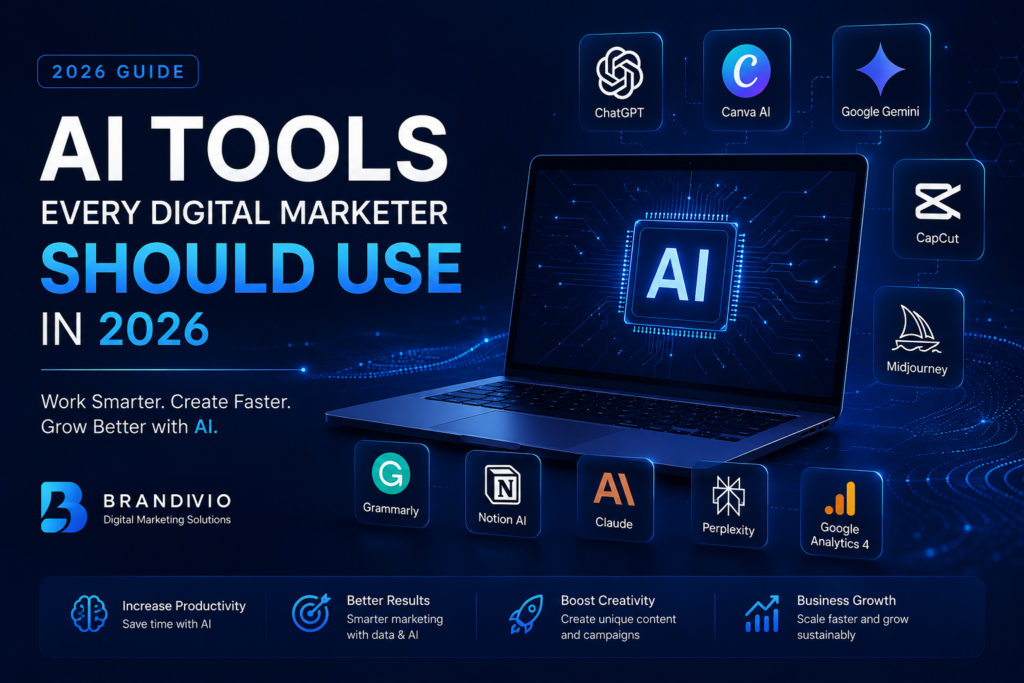
AI Tools Every Digital Marketer Should Use in 2026
AI Tools Every Digital Marketer Should Use in 2026 Introduction Artificial Intelligence (AI) is no longer just a trend—it has become an essential part of modern digital marketing. In 2026, businesses of all sizes are using AI-powered tools to create content, design graphics, optimize websites, run advertising campaigns, analyze customer behavior, and automate repetitive tasks. For marketing beginners, learning AI tools is one of the fastest ways to improve productivity and stay competitive. Instead of spending hours writing content, editing videos, or analyzing data manually, AI can help you complete these tasks in minutes while maintaining quality. However, AI is not meant to replace marketers. The most successful professionals use AI to enhance creativity, improve efficiency, and make better marketing decisions. In this guide, we’ll explore the top AI tools every digital marketer should know in 2026, how they work, and how they can help grow businesses faster. Why AI Is Essential for Digital Marketing Digital marketing involves many different tasks, including content creation, search engine optimization (SEO), social media management, graphic design, email marketing, paid advertising, and performance analysis. Managing all these activities manually can be time-consuming. AI tools help marketers by: Saving valuable time Automating repetitive tasks Improving content quality Generating creative ideas Increasing marketing efficiency Personalizing customer experiences Making data-driven decisions Businesses that combine AI with human creativity are often able to produce better campaigns in less time. 1. ChatGPT – Your AI Content Assistant ChatGPT has become one of the most popular AI tools for marketers. It can generate blog posts, website copy, social media captions, email campaigns, product descriptions, FAQs, and marketing ideas within minutes. Best Uses Writing SEO-friendly blog articles Creating marketing strategies Generating social media captions Writing email campaigns Brainstorming campaign ideas Keyword research assistance Why Beginners Love It Instead of staring at a blank page, beginners can use ChatGPT to generate ideas, outlines, and first drafts quickly. 2. Canva AI – Design Professional Graphics Easily Visual content plays a major role in digital marketing. Canva AI allows users to create professional-quality graphics without needing advanced design skills. Features AI image generation Magic Design Background removal AI presentations Social media templates Brand kits Perfect For Instagram posts Facebook ads Website banners YouTube thumbnails Marketing presentations Canva AI makes professional design accessible even for complete beginners. 3. CapCut AI – Smarter Video Editing Short-form videos dominate platforms like Instagram Reels, TikTok, and YouTube Shorts. CapCut AI helps marketers create engaging videos with minimal editing experience. AI Features Auto captions Background removal AI voiceovers Text-to-video Auto editing Video enhancement Video marketing has become one of the highest-performing content formats, making CapCut AI an excellent tool for beginners. 4. Google Gemini – AI for Research and Productivity Google Gemini helps marketers research topics, summarize information, generate ideas, and organize workflows efficiently. Helpful For Market research Competitor analysis Content planning Brainstorming Workflow assistance It integrates well with Google’s ecosystem, making it useful for marketers already using Google Workspace. 5. Perplexity AI – Smarter Research Finding accurate information online can be time-consuming. Perplexity AI provides concise answers with cited sources, making research faster and more reliable. Great For Industry research Trend analysis Competitor insights Fact-checking Content inspiration This tool is especially useful before writing blogs or creating marketing campaigns. 6. Midjourney – High-Quality AI Images Eye-catching visuals are essential for digital marketing. Midjourney helps generate unique images from text prompts. Best Uses Advertising creatives Website illustrations Blog featured images Social media graphics Brand concepts Businesses can create professional visuals without expensive photoshoots. 7. Claude AI – Long-Form Writing Claude AI is known for handling long documents effectively. It is useful for marketers who create detailed content. Ideal For Long-form blogs Marketing reports Business proposals Content editing Research summaries It helps maintain consistency across lengthy pieces of content. 8. Notion AI – Organize Marketing Projects Managing campaigns, content calendars, and team collaboration becomes easier with Notion AI. Features Content planning Task management Meeting notes Campaign organization AI writing assistance For agencies and marketing teams, Notion AI keeps projects structured and efficient. 9. Grammarly AI – Improve Your Writing Clear communication builds trust. Grammarly AI helps improve grammar, tone, clarity, and readability. Benefits Grammar correction Tone suggestions Sentence improvement Professional writing Plagiarism assistance (depending on plan) Even experienced marketers use Grammarly before publishing content. 10. Google Analytics 4 with AI Insights Creating campaigns is only half the job. Measuring performance is equally important. Google Analytics 4 provides AI-powered insights into website performance and customer behavior. Track Website visitors User engagement Traffic sources Conversion rates Customer journeys These insights help marketers make smarter decisions based on real data. How AI Improves Every Marketing Channel Content Marketing AI helps generate ideas, optimize articles, and improve readability while saving hours of manual work. SEO AI assists with keyword research, content optimization, competitor analysis, and technical recommendations. Social Media Marketing Marketers can create captions, generate visuals, schedule posts, and analyze performance more efficiently. Email Marketing AI personalizes subject lines, drafts emails, segments audiences, and optimizes send times. Paid Advertising AI helps create ad copy, test multiple variations, analyze campaign performance, and improve return on investment. Can AI Replace Digital Marketers? The simple answer is no. AI is a powerful assistant, but it cannot replace human creativity, strategic thinking, emotional intelligence, or relationship building. Successful marketing still depends on understanding customer needs, building trust, and making informed decisions. The marketers who will succeed in 2026 are those who know how to combine AI with their own expertise. Tips for Beginners If you’re just starting your digital marketing journey: Learn one AI tool at a time. Practice writing effective prompts. Always review AI-generated content before publishing. Add your own insights and creativity. Keep learning as AI technology evolves. Mastering a few reliable tools is far more valuable than trying every new platform. Why Businesses Should Embrace AI Businesses that adopt AI can: Increase productivity Reduce operational costs Publish content more consistently Improve customer engagement Make faster marketing decisions Scale campaigns efficiently Whether you’re a
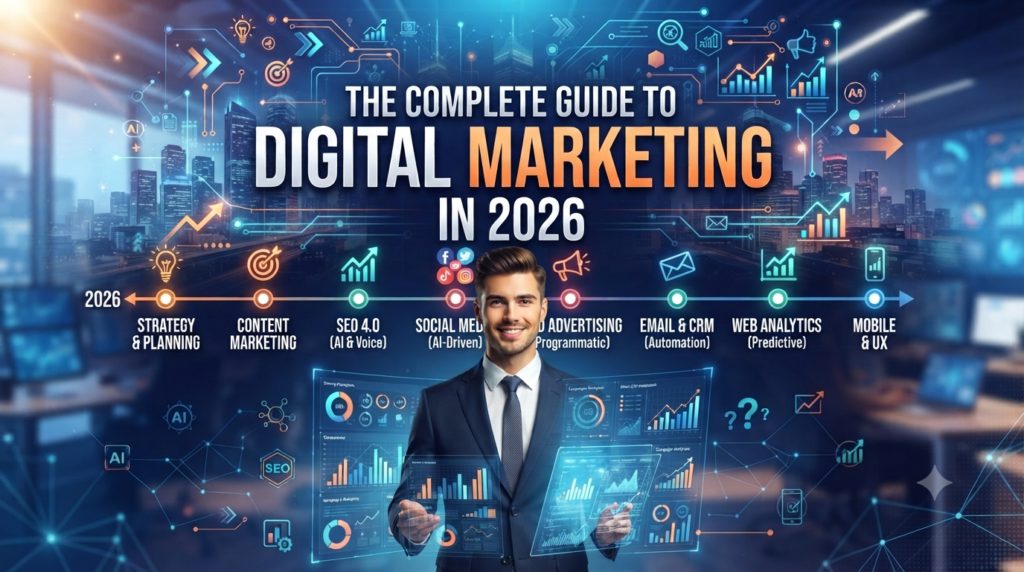
The Complete Guide to Digital Marketing in 2026
The Complete Guide to Digital Marketing in 2026 Digital marketing has transformed the way businesses connect with their audiences. In 2026, it is no longer just about having a website or posting on social media. Consumers expect personalized experiences, fast-loading websites, valuable content, and seamless interactions across multiple platforms. Businesses that adapt to these expectations are more likely to attract customers, build trust, and achieve sustainable growth. Whether you’re a startup, a local business, or a growing enterprise, digital marketing offers countless opportunities to expand your reach without the limitations of traditional advertising. With the rise of artificial intelligence, voice search, video marketing, and data-driven strategies, digital marketing has become more dynamic and results-oriented than ever before. This guide explores the key components of digital marketing in 2026, explains why it matters, and provides practical strategies that businesses can use to stay ahead in an increasingly competitive online world. What Is Digital Marketing? Digital marketing is the process of promoting products or services using online channels such as search engines, websites, social media, email, mobile apps, and digital advertisements. Unlike traditional marketing, digital marketing allows businesses to reach the right audience at the right time while measuring every campaign’s performance. This helps companies make smarter decisions and continuously improve their marketing efforts. Today, digital marketing is built around creating value for customers rather than simply promoting products. Why Digital Marketing Is More Important Than Ever Consumer behavior has changed significantly over the past few years. Before making a purchase, most customers research online, compare reviews, explore social media, and visit company websites. Businesses that have a strong digital presence enjoy several advantages: Greater brand visibility Increased website traffic Better customer engagement Higher conversion rates Improved return on investment (ROI) Stronger customer trust Long-term business growth In 2026, businesses that ignore digital marketing risk losing potential customers to competitors who invest in their online presence. Search Engine Optimization (SEO) SEO remains one of the most effective digital marketing strategies because it helps businesses attract organic traffic from search engines. Modern SEO focuses on: High-quality and helpful content Search intent optimization Website speed Mobile-friendly design Internal linking User experience Technical SEO E-E-A-T (Experience, Expertise, Authoritativeness, and Trustworthiness) Rather than stuffing keywords into articles, businesses now succeed by providing valuable information that genuinely answers users’ questions. Content Marketing Content is the foundation of successful digital marketing. People search online to solve problems, learn new skills, and make informed purchasing decisions. Businesses that consistently publish useful content establish themselves as trusted industry leaders. Examples of content marketing include: Blog articles Guides Case studies Videos Infographics Podcasts Email newsletters Good content educates, informs, and helps customers instead of aggressively selling products. Social Media Marketing Social media platforms continue to play an important role in building brand awareness and customer relationships. Businesses use platforms like Instagram, Facebook, LinkedIn, X, and YouTube to connect directly with their audiences. Effective social media marketing includes: Educational posts Short-form videos Customer testimonials Behind-the-scenes content Industry updates Interactive polls Community engagement The goal is not simply to gain followers but to build a loyal community that trusts your brand. Artificial Intelligence in Digital Marketing Artificial intelligence has become one of the biggest changes in digital marketing. Businesses now use AI to: Analyze customer behavior Generate content ideas Improve customer support through chatbots Personalize email campaigns Predict customer preferences Automate repetitive marketing tasks AI helps marketers work more efficiently while delivering better experiences to customers. However, human creativity, strategy, and authenticity remain essential for building long-term relationships. Email Marketing Still Delivers Results Despite the popularity of social media, email marketing continues to provide one of the highest returns on investment. Successful email marketing focuses on: Personalized messages Valuable information Helpful offers Customer education Automated follow-up sequences Instead of sending promotional emails every day, businesses should focus on delivering value and building trust over time. Pay-Per-Click (PPC) Advertising Paid advertising helps businesses reach potential customers quickly. Popular advertising platforms include: Google Ads Meta Ads LinkedIn Ads YouTube Ads A successful PPC campaign requires: Well-defined audience targeting High-quality landing pages Strong ad copy Continuous testing Budget optimization Paid advertising works best when combined with SEO and content marketing rather than replacing them. Video Marketing Is Growing Rapidly Video content has become one of the most engaging forms of digital communication. Businesses use videos for: Product demonstrations Tutorials Customer testimonials Educational content Brand storytelling Live sessions Short-form videos continue to attract significant engagement, while long-form educational videos help establish authority within an industry. Mobile-First Marketing Most internet users now browse websites on smartphones. Businesses must ensure that their websites are: Mobile responsive Fast loading Easy to navigate Secure User-friendly A poor mobile experience can increase bounce rates and reduce conversions, regardless of how much traffic a website receives. Data Analytics and Performance Tracking One of digital marketing’s greatest strengths is the ability to measure performance accurately. Businesses monitor metrics such as: Website traffic Conversion rates Click-through rates Customer engagement Bounce rates Lead generation Return on investment Analyzing this data helps businesses identify what works, eliminate ineffective strategies, and continuously improve results. Building Brand Trust Online Customers prefer brands they trust. Trust can be built through: Honest communication Consistent branding Positive customer reviews Secure websites Transparent pricing Helpful educational content Excellent customer support Long-term success depends not only on attracting visitors but also on creating lasting relationships with customers. Common Digital Marketing Mistakes to Avoid Many businesses struggle because they focus on short-term results instead of long-term growth. Some common mistakes include: Ignoring SEO Publishing low-quality content Inconsistent social media activity Poor website performance Not tracking analytics Targeting the wrong audience Overusing AI-generated content without human editing Neglecting customer experience Avoiding these mistakes can significantly improve marketing performance. The Future of Digital Marketing Digital marketing will continue evolving as technology advances. Some major trends shaping the future include: AI-powered search experiences Voice search optimization Personalized customer journeys Privacy-focused marketing First-party data collection Interactive content Predictive analytics Automation combined with human creativity Businesses that remain flexible
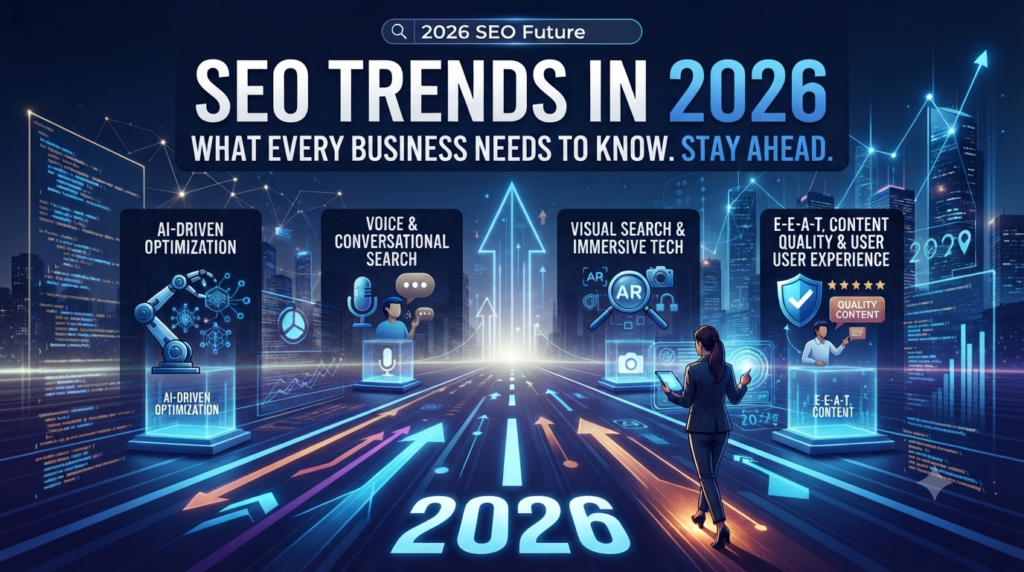
SEO Trends in 2026: What Every Business Needs to Know to Stay Ahead
Search Engine Optimization (SEO) has always been one of the most effective ways to generate organic traffic, build brand authority, and attract potential customers. However, in 2026, SEO is evolving faster than ever before. Artificial intelligence is transforming how people search online. Instead of simply typing keywords into Google, users are now asking complete questions through AI-powered search tools and expecting instant, accurate answers. Search engines are becoming smarter, and businesses that continue using outdated SEO strategies risk losing valuable visibility. The good news is that SEO is far from dead. In fact, it’s becoming more exciting and more focused on quality than ever before. In this guide, we’ll explore the biggest SEO trends shaping 2026 and explain how your business can stay ahead of the competition. Why SEO Matters More Than Ever Millions of searches happen every day, but users are becoming more selective about which results they trust. Search engines now prioritize websites that provide valuable, accurate, and helpful information rather than those that simply repeat keywords. Businesses investing in modern SEO enjoy benefits such as: Higher organic traffic Better brand credibility Increased qualified leads Lower customer acquisition costs Long-term online visibility SEO has shifted from simply ranking pages to becoming the most trusted answer for users. AI-driven search experiences are making authority, structured content, and expertise even more important. 1. AI Search Is Reshaping SEO Artificial intelligence is changing the way search engines understand content. Instead of matching exact keywords, AI evaluates context, user intent, expertise, and overall usefulness. Modern search experiences summarize information directly within search results, making content quality more important than ever. To succeed: Write naturally for humans. Cover topics in depth. Answer common questions. Use clear headings. Include original insights and examples. Businesses creating genuinely useful content have a much better chance of appearing in both traditional search results and AI-generated answers. 2. Answer Engine Optimization (AEO) Is Becoming Essential One of the biggest changes in 2026 is the rise of Answer Engine Optimization (AEO). Instead of optimizing only for Google rankings, businesses should also optimize content so AI assistants can reference it when answering user questions. To improve your AEO strategy: Answer questions directly. Add FAQ sections. Use simple language. Structure content with headings. Include trustworthy sources and original information. SEO remains the foundation, while AEO builds on it by helping content become a trusted citation for AI-generated answers. 3. Search Intent Is More Important Than Keywords Keyword stuffing disappeared years ago. In 2026, successful SEO focuses on understanding why someone searches. Every search falls into one of several categories: Informational Commercial Transactional Navigational If someone searches “best SEO agency for small businesses,” they likely want recommendations—not a definition of SEO. Creating content that matches search intent leads to higher rankings and better engagement. 4. High-Quality Content Wins Every Time Publishing dozens of average articles no longer works. Instead, create content that: Solves real problems. Includes practical examples. Shares unique insights. Uses clear formatting. Is regularly updated. Google and AI search systems reward content that demonstrates expertise, experience, authority, and trustworthiness rather than generic articles. 5. E-E-A-T Is a Major Ranking Factor E-E-A-T stands for: Experience Expertise Authoritativeness Trustworthiness Search engines increasingly reward websites that clearly demonstrate these qualities. Ways to improve E-E-A-T include: Publishing expert-written content. Displaying author information. Keeping information accurate. Citing reliable sources when appropriate. Maintaining an updated website. Trust is becoming one of the strongest competitive advantages in SEO. 6. User Experience Directly Impacts Rankings Even excellent content can struggle if your website provides a poor experience. Focus on: Fast loading speed Mobile responsiveness Easy navigation Readable typography Secure HTTPS connection Minimal intrusive pop-ups A positive user experience keeps visitors engaged and encourages them to explore more pages. 7. Topic Authority Beats Individual Keywords Instead of publishing isolated articles targeting single keywords, build complete topic clusters. For example, if your website focuses on digital marketing, create related content around: SEO Local SEO Technical SEO Content Marketing AI Marketing Google Ads Social Media Marketing Interlink these pages naturally. This helps search engines understand your expertise and improves rankings across multiple keywords. 8. Video SEO Continues to Grow Video content is becoming increasingly important. Short tutorials, explainers, and educational videos often appear directly in search results. Optimize videos by: Writing descriptive titles. Using relevant keywords naturally. Adding transcripts. Creating engaging thumbnails. Embedding videos within related blog posts. Video keeps users engaged and increases the time they spend on your website. 9. Voice and Conversational Search People now search more naturally. Instead of typing: “SEO tips” They ask: “What are the best SEO strategies for a small business in 2026?” Your content should answer complete questions using conversational language. Including FAQ sections can significantly improve visibility for voice searches and AI assistants. 10. Technical SEO Still Matters While content is critical, technical SEO remains essential. Regularly check: Broken links Crawl errors XML sitemaps Robots.txt Duplicate content Image optimization Internal linking Structured data A technically healthy website allows search engines to crawl and index content more efficiently. 11. Brand Authority Is Becoming a Strong Ranking Signal Search engines increasingly recognize trusted brands. Build authority by: Publishing consistently. Earning quality backlinks. Encouraging customer reviews. Being active on social media. Maintaining consistent branding. A recognizable brand is more likely to earn clicks, mentions, and trust. 12. Local SEO Remains Crucial For businesses serving specific locations, local SEO continues to deliver excellent results. Optimize by: Keeping business information accurate. Encouraging genuine customer reviews. Publishing location-specific content. Optimizing your Google Business Profile. Using local keywords naturally. Local visibility often leads to higher conversion rates because searchers usually have strong purchase intent.