
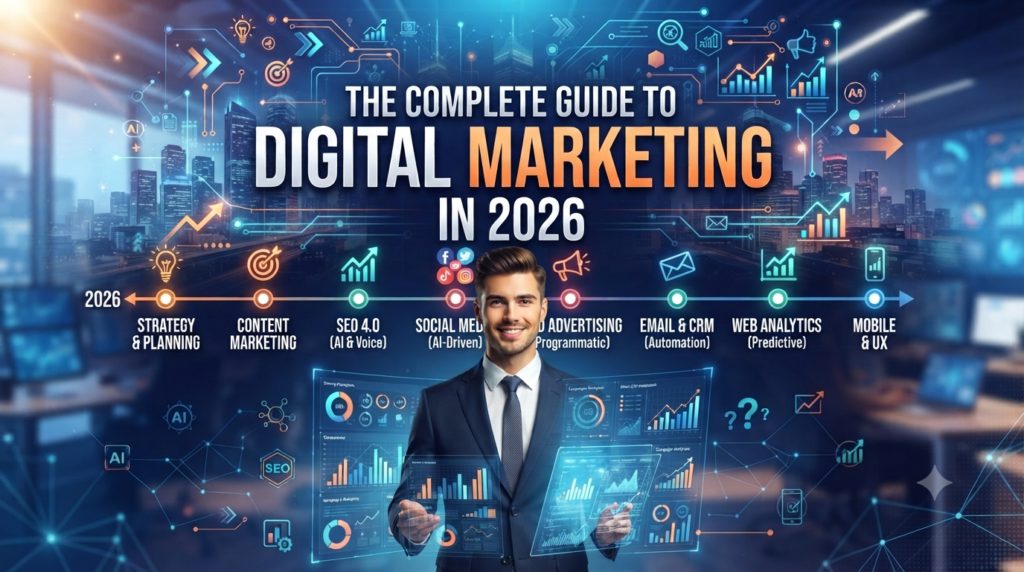
The Complete Guide to Digital Marketing in 2026
The Complete Guide to Digital Marketing in 2026 Digital marketing has transformed the way businesses connect with their audiences. In 2026, it is no longer just about having a website or posting on social media. Consumers expect personalized experiences, fast-loading websites, valuable content, and seamless interactions across multiple platforms. Businesses that adapt to these expectations are more likely to attract customers, build trust, and achieve sustainable growth. Whether you’re a startup, a local business, or a growing enterprise, digital marketing offers countless opportunities to expand your reach without the limitations of traditional advertising. With the rise of artificial intelligence, voice search, video marketing, and data-driven strategies, digital marketing has become more dynamic and results-oriented than ever before. This guide explores the key components of digital marketing in 2026, explains why it matters, and provides practical strategies that businesses can use to stay ahead in an increasingly competitive online world. What Is Digital Marketing? Digital marketing is the process of promoting products or services using online channels such as search engines, websites, social media, email, mobile apps, and digital advertisements. Unlike traditional marketing, digital marketing allows businesses to reach the right audience at the right time while measuring every campaign’s performance. This helps companies make smarter decisions and continuously improve their marketing efforts. Today, digital marketing is built around creating value for customers rather than simply promoting products. Why Digital Marketing Is More Important Than Ever Consumer behavior has changed significantly over the past few years. Before making a purchase, most customers research online, compare reviews, explore social media, and visit company websites. Businesses that have a strong digital presence enjoy several advantages: Greater brand visibility Increased website traffic Better customer engagement Higher conversion rates Improved return on investment (ROI) Stronger customer trust Long-term business growth In 2026, businesses that ignore digital marketing risk losing potential customers to competitors who invest in their online presence. Search Engine Optimization (SEO) SEO remains one of the most effective digital marketing strategies because it helps businesses attract organic traffic from search engines. Modern SEO focuses on: High-quality and helpful content Search intent optimization Website speed Mobile-friendly design Internal linking User experience Technical SEO E-E-A-T (Experience, Expertise, Authoritativeness, and Trustworthiness) Rather than stuffing keywords into articles, businesses now succeed by providing valuable information that genuinely answers users’ questions. Content Marketing Content is the foundation of successful digital marketing. People search online to solve problems, learn new skills, and make informed purchasing decisions. Businesses that consistently publish useful content establish themselves as trusted industry leaders. Examples of content marketing include: Blog articles Guides Case studies Videos Infographics Podcasts Email newsletters Good content educates, informs, and helps customers instead of aggressively selling products. Social Media Marketing Social media platforms continue to play an important role in building brand awareness and customer relationships. Businesses use platforms like Instagram, Facebook, LinkedIn, X, and YouTube to connect directly with their audiences. Effective social media marketing includes: Educational posts Short-form videos Customer testimonials Behind-the-scenes content Industry updates Interactive polls Community engagement The goal is not simply to gain followers but to build a loyal community that trusts your brand. Artificial Intelligence in Digital Marketing Artificial intelligence has become one of the biggest changes in digital marketing. Businesses now use AI to: Analyze customer behavior Generate content ideas Improve customer support through chatbots Personalize email campaigns Predict customer preferences Automate repetitive marketing tasks AI helps marketers work more efficiently while delivering better experiences to customers. However, human creativity, strategy, and authenticity remain essential for building long-term relationships. Email Marketing Still Delivers Results Despite the popularity of social media, email marketing continues to provide one of the highest returns on investment. Successful email marketing focuses on: Personalized messages Valuable information Helpful offers Customer education Automated follow-up sequences Instead of sending promotional emails every day, businesses should focus on delivering value and building trust over time. Pay-Per-Click (PPC) Advertising Paid advertising helps businesses reach potential customers quickly. Popular advertising platforms include: Google Ads Meta Ads LinkedIn Ads YouTube Ads A successful PPC campaign requires: Well-defined audience targeting High-quality landing pages Strong ad copy Continuous testing Budget optimization Paid advertising works best when combined with SEO and content marketing rather than replacing them. Video Marketing Is Growing Rapidly Video content has become one of the most engaging forms of digital communication. Businesses use videos for: Product demonstrations Tutorials Customer testimonials Educational content Brand storytelling Live sessions Short-form videos continue to attract significant engagement, while long-form educational videos help establish authority within an industry. Mobile-First Marketing Most internet users now browse websites on smartphones. Businesses must ensure that their websites are: Mobile responsive Fast loading Easy to navigate Secure User-friendly A poor mobile experience can increase bounce rates and reduce conversions, regardless of how much traffic a website receives. Data Analytics and Performance Tracking One of digital marketing’s greatest strengths is the ability to measure performance accurately. Businesses monitor metrics such as: Website traffic Conversion rates Click-through rates Customer engagement Bounce rates Lead generation Return on investment Analyzing this data helps businesses identify what works, eliminate ineffective strategies, and continuously improve results. Building Brand Trust Online Customers prefer brands they trust. Trust can be built through: Honest communication Consistent branding Positive customer reviews Secure websites Transparent pricing Helpful educational content Excellent customer support Long-term success depends not only on attracting visitors but also on creating lasting relationships with customers. Common Digital Marketing Mistakes to Avoid Many businesses struggle because they focus on short-term results instead of long-term growth. Some common mistakes include: Ignoring SEO Publishing low-quality content Inconsistent social media activity Poor website performance Not tracking analytics Targeting the wrong audience Overusing AI-generated content without human editing Neglecting customer experience Avoiding these mistakes can significantly improve marketing performance. The Future of Digital Marketing Digital marketing will continue evolving as technology advances. Some major trends shaping the future include: AI-powered search experiences Voice search optimization Personalized customer journeys Privacy-focused marketing First-party data collection Interactive content Predictive analytics Automation combined with human creativity Businesses that remain flexible